Why do I touch my face so much?
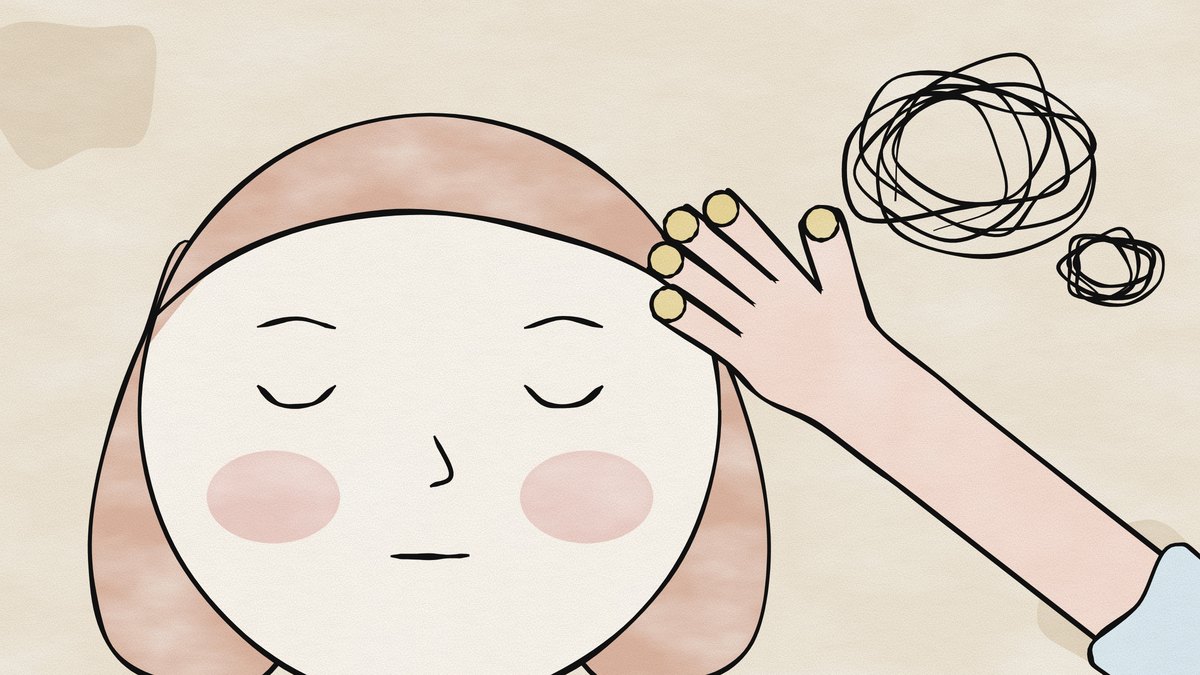
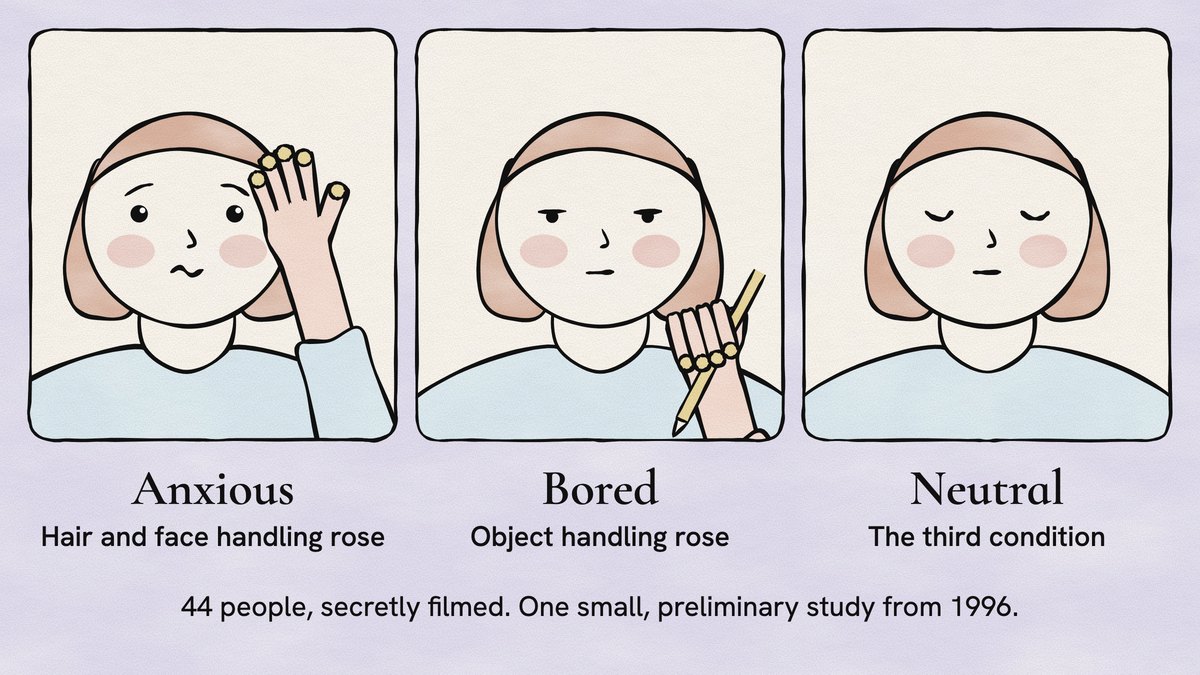
Anxious hands and bored hands seem to do different things. In a small 1996 study, 44 people were secretly filmed in three conditions: anxious, bored and neutral. Handling of hair and face rose in the anxious condition. Handling of objects rose in the bored one 1.
The paper's title asks, "Are persons with nervous habit nervous?" For hair and face, in this one preliminary study, the answer leaned towards yes. Much of the research on this habit circles the same idea, that hands respond to what is going on in your head.
Why do my hands go to my face when I'm stressed or concentrating?
Your hands seem to head for your face when a moment asks more of you. A 2021 systematic review, titled with some exasperation "Stop touching your face!", reports that these touches "seem to increase in frequency and duration in socially, emotionally as well as cognitively challenging situations" 2. The same review links them to attention, working memory and managing emotions 2. A tense call, a hard paragraph and an awkward silence would all qualify, though those examples are ours.
One lab study tried to catch this in the act. Fourteen people felt complex objects and had to remember them over a five-minute wait while unpleasant sounds played. Video and EEG ran throughout. Spontaneous face touches increased while the sounds played, and theta brain activity before and after those touches changed in ways the authors tied to working memory and emotion 3.
The paper's title says these changes "may represent" such processes, and "may" is the right word 3. One reading is that touching your face helps you steady yourself while you hang on to a thought. If so, the hand on your cheek during a hard email may be doing a small job for you. We found no proof of it.
Why don't I notice I'm doing it?
Your hand can reach your face without any decision from you. The 14-person paper describes these movements as "frequently accomplished with little or no awareness" 3. Back in 1969, Ekman and Friesen proposed something similar, that such touches are "usually performed with little awareness, and no intention to communicate" 4.
Habit research offers a likely mechanism. In Wood and Neal's model, habits grow from repeated links between an action and its context. Once a habit has formed, "perception of contexts triggers the associated response without a mediating goal" 5. In plain words, the situation starts the movement and wanting doesn't come into it. That model covers habits in general. Applying it to face touching is our inference: sit in the same chair over the same kind of work often enough, and the chair and the work may be all it takes.
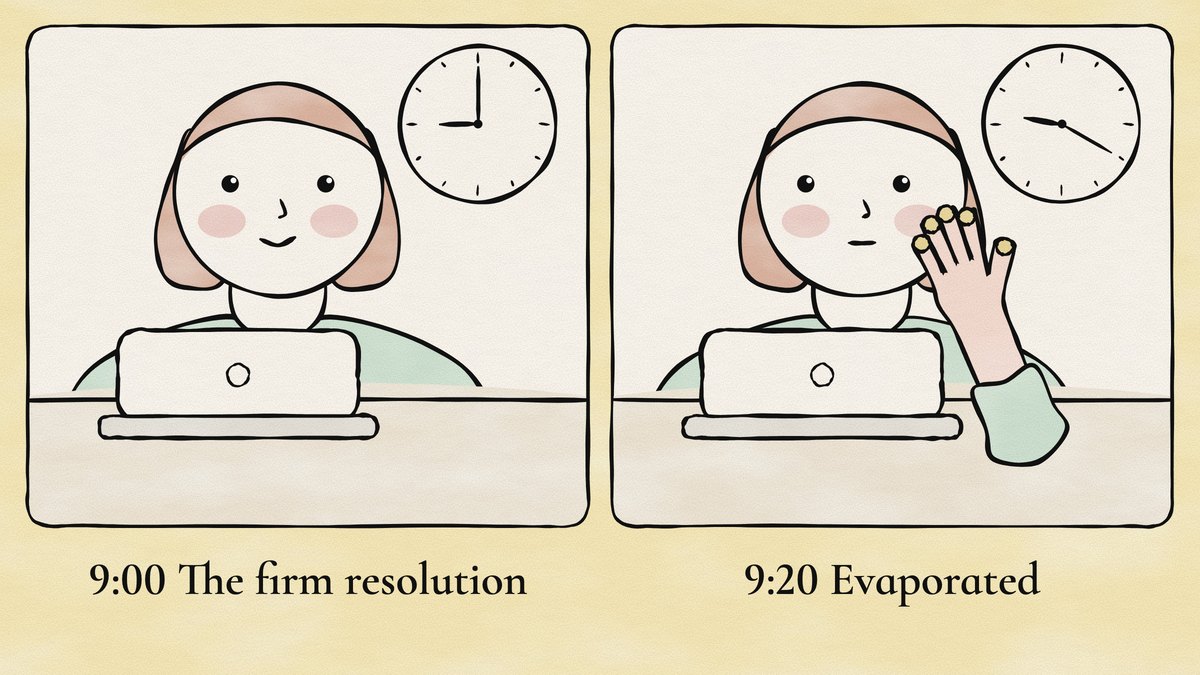
A questionnaire study points the same way. Researchers recruited 656 Canadian adults, asked them about touching their eyes, nose or mouth, and heard back from 569 two weeks later. How automatic the behaviour was predicted how much they did it better than anything else measured 6. The authors suggest that reflecting on the habit may raise your intention to cut down, while cutting down "may require strategies that address the automatic nature of this behaviour" 6. The answers were self-reported, and the study tested no way of stopping. It does fit a familiar experience, the firm resolution at 9:00 that has evaporated by 9:20.
Is it stress, boredom or just habit?
Stress, boredom and habit may all play a part, and the mix may differ from one hand habit to the next. Hair and face handling rose with anxiety in the 1996 study 1. Nail biting keeps different company: 40 undergraduates who bit their nails did it most often when left alone and bored, or when stuck on hard maths problems 7. The two studies used different methods, so the comparison is ours. Still, it makes sense of someone who bites their nails through a dull afternoon and rubs their forehead before a presentation. Those may be two habits with two triggers.
Do I touch my face more than other people?
You would need a camera to know where you stand. Twenty-six medical students filmed in lectures averaged 23 touches an hour 8. Among 10 student volunteers at desks, contacts with the eyes, nostrils and lips ranged from 3 to 104 over three hours 9. "So much" covers a lot of ground, and feeling that you do it constantly may say little about where you sit in that range. The unusual part may be that you noticed.
What doesn't the research show?
Scientists can't yet say why any one person touches their face. The 2021 review states that the underlying mechanisms "are still poorly understood and that various basic questions remain unanswered" 2. The lab studies are small, 14 and 44 people, and they show links. None proves that touching your face calms you or helps you think. None explains why one volunteer makes 3 contacts in three hours and another 104.
What can I do with this?
If you are curious about your own pattern, try noting what you were doing the next time you catch your hand up there: a hard task, a nervous moment, an empty one. That is a small experiment for your own interest, and we found no test of it as a method.
Catching the hand is the hard part. We built Mooo to do the catching while you work or watch a film: it sees a hand that stays near your face and rings a soft cowbell.
Sources
- Woods DW, Miltenberger RG (1996). Are persons with nervous habit nervous? A preliminary examination of habit function in a nonreferred population. Journal of Applied Behavior Analysis 29(2):259-261. PubMed
- Spille JL, Grunwald M, Martin S, Mueller SM (2021). Stop touching your face! A systematic review of triggers, characteristics, regulatory functions and neuro-physiology of facial self touch. Neuroscience and Biobehavioral Reviews 128:102-116. PubMed
- Grunwald M, Weiss T, Mueller S, Rall L (2014). EEG changes caused by spontaneous facial self-touch may represent emotion regulating processes and working memory maintenance. Brain Research 1557:111-126. PubMed
- Ekman P, Friesen WV (1969). The repertoire of nonverbal behavior: Categories, origins, usage, and coding. Semiotica 1(1):49-98. Not indexed in PubMed. DOI
- Wood W, Neal DT (2007). A new look at habits and the habit-goal interface. Psychological Review 114(4):843-863. PubMed
- Wilson M, van Allen ZM, Grimshaw JM, Brehaut JC, Durand A, Lalonde JF, Manuel DG, Michie S, West R, Presseau J (2023). Reducing touching eyes, nose and mouth ('T-zone') to reduce the spread of infectious disease: A prospective study of motivational, volitional and non-reflective predictors. British Journal of Health Psychology 28(4):893-913. PubMed
- Williams TI, Rose R, Chisholm S (2007). What is the function of nail biting: an analog assessment study. Behaviour Research and Therapy 45(5):989-995. PubMed
- Kwok YL, Gralton J, McLaws ML (2015). Face touching: a frequent habit that has implications for hand hygiene. American Journal of Infection Control 43(2):112-114. PubMed
- Nicas M, Best D (2008). A study quantifying the hand-to-face contact rate and its potential application to predicting respiratory tract infection. Journal of Occupational and Environmental Hygiene 5(6):347-352. PubMed